



5 Practical principles for high-impact innovations
“Innovation is what sets a leader apart from a follower”
With this famous maxim, Steve Jobs summed up a fundamental and increasingly topical concept. For businesses –regardless of size, sector, or technologies used–, innovation becomes essential.
Innovation is essential not only to thrive, but also to ensure the same survival.
Starting from this truth now established and shared, let’s try to reflect:
How many truly high-impact innovations have you launched on the market in recent years?
I’m not talking about incremental improvements to existing products or solutions. I’m not talking about product or service changes that have made you thrive in recent years to meet competition or meet some customer demand.
I’m talking, instead, about innovations that can differentiate them from competitors, innovations that customers love so much that they reward them with constant and growing purchases.
The answer is: “None”? Or: “Few”? Then you most likely find yourself in at least one of these conditions:
- You don’t have enough resources to invest
- You don’t want to invest resources in a business with highly uncertain returns
- Your people aren’t innovative enough
- You don’t have enough time to devote to innovation
- You have some good ideas, but your competitors are better at “selling them”
The truly worrying thing is that focusing on these conditions does not allow us to see and focus on solving the real problem that underlies the lack of capacity for innovation.
The problem that unites companies that strive to innovate without achieving appreciable results is the lack of an innovative system!
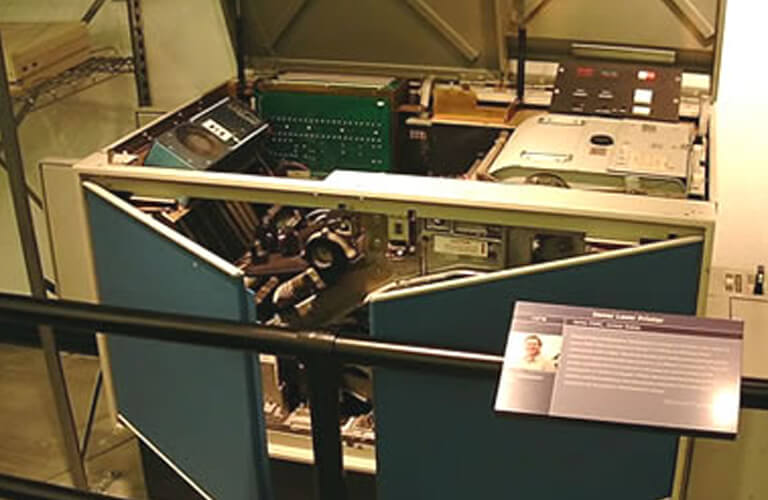
Emblematic in this sense is the story of Xerox and the laser printer, created by optical engineer Gary Starkweather. Starkweather had a revolutionary insight for the time: he thought he could make printers capable of printing anything by translating any font or image into digital format and sending it directly to the printer.
A rather common idea today, but completely revolutionary when it was conceived. Starkweather’s boss, however, thought the idea was unfounded and suggested to his collaborator that he find something else to do. Gary was, however, strongly convinced of his idea. As soon as he had some time, he did his experiments secretly, carving out time between the various activities. The situation soon became untenable, and so Starkweather asked to be transferred to Xerox Parc, Xerox Corporation’s nascent innovation division, where he was transferred in 1971. Gary and his team, despite a thousand difficulties, managed to develop and market the laser printer. In 1981, he introduced Star 8010 as a personal-use printer at a price of $17,000. This obviously did not help its spread. It wasn’t until 1984 that the digital printer became a public domain product thanks to HP’s first LaserJet.

Despite the presence of a “creative genius” like Starkweather, extremely motivated and persevering, despite huge investments in innovation – Xerox Parc was a huge research laboratory equipped with the best technologies and minds of the time – Xerox failed to fully exploit its innovation.
It was, in fact, HP that dominated the laser printer market. Unfortunately for Xerox this was not an isolated case. Xerox Parc for example invented the mouse and graphical interfaces as we know today. However, it was Apple that benefited from those results by revolutionizing the world of computers!
Xerox had not yet fully fine-tuned its innovation system at the time. It is no coincidence that following these events, the company profoundly rethought the innovative model and tried to create a system that would allow it to benefit from all the efforts and investments made.
Creating an innovation system
But what does an innovation system need to have to be effective? What should be composed of?
Like Lenovys, and before that as professionals, we spent years understanding what enabled some companies –like Apple, Toyota, Artemide, Alessi, and more– to achieve above-average results in innovation. This allowed us to distinguish the things that worked (and continue to work) from those that didn’t (Are you familiar with the false myths of innovation?).
But that would still not be enough.
Our role in supporting companies in a wide variety of sectors has allowed us to test and field-test the identified best practices, adapting them to the Italian context of SMEs and companies that lack the financial resources or developed venture capital systems available as in other countries.
It is from this research and experience that the five-tier innovation system called Impact Innovation was created.
The goal is to support and accelerate companies’ progress in creating the innovation system. To help you work right away in this direction we have selected five practical principles (one for each element of the Impact Innovation system) of immediate application that will allow you to quickly start working on creating your innovation system and thus achieve the desired results!
Here are the five basic principles to start with.
#1. Work on the impact proposal not the product
Companies, entrepreneurs, and people involved in R&D are usually in love with their products. Even when they want to innovate, they always try to answer the following question “how can I improve my product?”. It is a pity that this question does not lead to appreciable results when talking about high-impact innovation. Customers, in fact, don’t care about any of our products!
Companies that continually innovate successfully start from a completely different assumption. The question that constantly guides all their innovation efforts is: “How can I propose to my customers a result in functional, emotional, or status terms that is superior to that of competing products?”
Steve Jobs was a master in this regard. The iPod wasn’t the first MP3 player, but it was the first product to offer a completely new impact to its customers thanks to its integrated product (iPod) / service (iTunes) system: the ability to customize your music experience on the go in a “cool” way (by creating playlists that can be synchronized with a touch using iTunes).
#2. Make “complete” your innovation
Once the proposal I want to make to the customer has been defined, that is, the result I want to enable them to achieve thanks to the proposed innovation, we move on to design the solution. The most common mistake I’ve seen companies make is focusing on the product and, at best, the complementary products/services associated with it.
The spectrum of elements to consider is much broader and much richer in opportunities! I could, in fact, innovate the support supply chain needed to ensure the constant availability of my solution over time, or think in terms of customer experience to make the entire purchasing experience integrated and coherent. The more innovation I introduce in these areas, the greater the difficulty competitors will have in copying and therefore the higher the revenues.
Taking the iPod example, Apple designed not only the product/service system (player + iTunes), but also the supply chain. Consider, for example, the revolution linked to the possibility of purchasing a single song for 0.99€ instead of the entire album, made it possible thanks to partnerships with major record companies. It is a clear example of supply chain design consistent with Apple’s chosen impact proposition. Also note the innovation from the customer experience point of view, linked to the world of Apple stores. Or think of McDonald’s, which, despite not offering an exceptionally high-quality product, has innovated significantly in the supply chain (standardized and visible processes, evolved partnerships with suppliers for real-time sourcing, management of stores as “affiliates”) and from a customer experience perspective (brand management, thoughtful and coordinated creation of spaces within stores).
The possible tactics to innovate comprehensively are different and their knowledge gives a huge competitive advantage!
#3. Experiment right away, even when you think you’re not ready yet
To generate high-impact innovations without wasting unnecessary time and energy, it is necessary to quickly understand whether the impact proposal, and the configuration chosen for our solution, truly adds value to the customer. However, companies typically employ effort and energy to develop the most comprehensive solutions possible to test on a large scale to have statistically significant results. Or they spend time and resources on long debates about what is best to develop.
These ways of acting present limitations and weaknesses that are no longer acceptable in the current competitive landscape, which is increasingly dynamic and fast. To learn quickly about the customer’s real needs, it is necessary to proceed with a highly experimental approach and develop the so-called MPF (Minimum Feasible Product).
MPF is an extremely simplified version of the solution you want to develop and contains only the features needed to gather feedback from a small group of customers. Rapid rounds of testing and learning allow you to quickly develop your solution without wasting energy and effort on fully developing features that don’t add value to customers.
A leading and innovative company like Airbnb has been a master at using experimentation to quickly fine-tune its solution. Airbnb was born almost by accident to Brian Chesky, Joe Gebbia, and Nathan Blecharczyk, who in 2007 decided to supplement their income by renting a room in their San Francisco apartment. In fact, a major design conference was to be held in the city and a strong flow of visitors was expected. The three friends create a website in a very short time to publicize their initiative. In other words, they quickly created a Minimum Feasible Product. They realized, by testing it directly in the field, that this initiative was of interest not only to young people and students, but also to older people. By iteratively testing and improving their solution, thanks to successive versions of MPF, Airbnb has now become one of the largest hotel chains in the world.
#4. Saying no to 1,000 things
Even the brightest and most innovative impact proposals risk not generating the desired results if the company is unable to implement them and bring them to market quickly. From this point of view, with the desire to do it soon, companies launch several initiatives, several projects in parallel with the belief that they will be able to reduce their time in this way.
Reality unfortunately proves otherwise. Multiple projects run simultaneously by the same resources end up slowing each other down. In this regard Steve Jobs said that innovation comes from “saying no to 1,000 things”. In fact, when Jobs returned to lead Apple, he dramatically reduced the number of products and projects the company was working on. For example, shortly after his return to the company he closed the Newton project, a forerunner of modern tablets, just five years after its launch. A similar end came to the QuickTake project, the Apple-branded camera that remained on the market for only three years. It is good to point out that it is not a question of the goodness of the idea. Both the tablet and the camera have proven overtime to be winning insights. However, at that historic moment, Apple decided to focus on a single innovation project: the launch of the iMac, the product that marked Apple’s rebirth.
In other words, innovation is the result of hard work focused in one direction. Dispersing energy and effort along different directions never leads to excellence, but it does lead to doing different things roughly and with longer times.
#5. You don’t have to do everything alone
When it comes to innovation, many companies think about how to make their activities secret, about not letting the outside world know what they are doing, about what they are focusing on. Although in some cases the need for confidentiality is a must, in many for some issues it is possible to open to the outside with enormous benefits in terms of saving time, resources and increasing levels of innovation.
In today’s global and interconnected world, the ability to make the most of Open paradigms (Open Innovation, Crowdsourcing) can deliver enormous benefits. P&G is an excellent example of how it is possible to stimulate and sustain its innovative activity using the Open Innovation lever. In 2000, P&G CEO AG Lafley set an extremely ambitious goal. P & G was to acquire 50% of its innovations from outside. This did not mean replacing the capabilities of the approximately 7,500 researchers working at the company. This meant making them work differently and more productively, taking advantage of the knowledge and innovative capabilities dispersed across the planet. This is how P&G created its innovation management system known as Connect & Develop.
Bill Joy, Co-founder of Sun Microsystem said, “no matter who you are, most of the smartest people work for someone else”. In other words, no matter how big, how effective and efficient a company may be, there will always be brighter, more prepared people outside. The real challenge is to build a system, as P&G has done, to leverage and exploit these widespread skills to its advantage.
Working on these five points is crucial to creating a genuine innovative system capable of continuously generating high-impact innovations. High-impact innovation is also possible in Italy, even for a small company, even in sectors traditionally considered poorly innovative. For example, Cromology Italia – with which we have the pleasure of collaborating– has demonstrated how, with the right innovation system, even a traditional company in a stable sector like paints can generate enormous innovations (see the Italian interview with the CEO of Cromology Italia).
And how can you use these insights to improve your innovation system?
Article written by:

Gabriele Colombo
Know How & People Development
He has developed his skills especially in the field of innovation according to the logic of design driven by applying the concepts in the area of research and development in companies of international character. He was responsible for the definition, planning and execution of research and consultancy programmes related to the world of innovation and continuous improvement; His experience is added to the role of teacher of Project Management and Innovation Management in courses dedicated to business executives at the School of Management of the Politecnico di Milano.
Partner of Lenovys since 2021.
Read more