



The 7 challenges for the Made in Italy furniture industry
Furniture is one of the sectors of excellence of Made in Italy.
It is worth over 41 billion euros and employs over 320,000 people. However, over the last decade our share of exports in the world has shrunk by 5 percentage points.
One of the causes can be attributed to strong competition from producers –both near and far, from the Poles to the Chinese-who, even in the future, will continue to attack the market shares of those Italian companies that will not be able to evolve quickly.
Between craftsmanship and industrialization
When we talk about furniture, we refer to a series of products which, like other product categories, combine two aspects in apparent opposition.
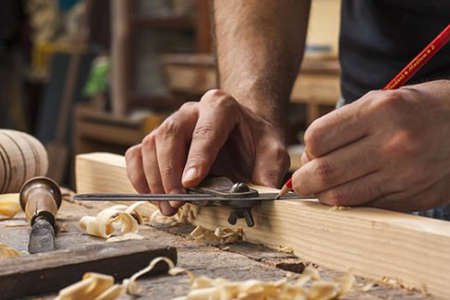
On the one hand, craftsmanship, a value often emphasized (think of how common it is to find advertising claims like “hand-crafted luxury sofa” or “hand-painted, hand-crafted wooden furniture”); on the other, the entrepreneur’s need to industrialize a process that continues to maintain a high level of manual skill.
While it is true that craftsmanship is a cornerstone of the value proposition of Italian producers, it is equally true that industrialization is necessary to reduce costs. The great Chinese dragon is ready, in fact, to offer products of very good quality, substantially similar or superior to Made in Italy, compensating for the lack of local know-how and creativity with the acquisition of Italian managers, designers and professionals who have moved to China.
The 7 challenges to grow the business in the furniture industry
The main challenges the sector will face start precisely from knowing how to combine the valorization of the most authentic Made in Italy with the ability to apply industrial logic and processes, and are reflected in the following 7 critical issues:
1. Competition below cost
The main critical issue for the Italian entrepreneur is reducing the cost of products and processes –thus establishing a lean organization “Lean” – to counter the Far East market by increasing efficiency and productivity, improving the level of service, increasing the quality of products and processes, reducing both material inventories and stocks and waste, defects and rework.
The great designer Achille Castiglioni expressed the logic of Lean Thinking in this way with reference to the meaning of carrying out effective design:
“Erase, erase, erase, and finally find a main design component; while we were designing, we were against the invasiveness of drawing, we were looking for the minimum stroke that served the function; we wanted to go so far as to say: less than this cannot be done.”
2. Product replicability
The mobile product is average “poor”, does not retain advanced technologies within it. There are few materials, and this means that a benchmarking analysis is very easy to do.
A foreign competitor can thus bypass the creativity of which he/she is deficient, study a certain model and subsequently replicate it.
This has ensured that the technical level has been brought into line over time. Even in China, where a few decades ago there were poor quality products on the market, consumers can now find products qualitatively like Made in Italy – in some cases even optimized.
The response of the company cannot be only the launch of a new or innovative product, but rather the creation of a real innovation system capable of continuously generating high-impact innovations: innovations that create a “progress”, a sensitive improvement, in the lives of customers and people and not just “new” products (For further information see the Impact Innovation methodology).
3. The difficulty of measuring
The world of furniture, unlike other sectors, thrives on one peculiarity: the difficulty of measuring. If we reflect on whether we buy a piece of furniture “because we like it” or buy a sofa “because it is comfortable”, this is direct evidence that subjectivity prevails in measurement.
What’s comfortable for him isn’t comfortable for her, just as your favorite color scheme can be an unsightly choice for me. Moreover, specialized magazines emphasize how, to decorate your home with taste, it is important “never stray from your own taste”!
On the one hand, this lack of objectivity can make selling easier. On the other hand, if a company proposes a product with better performance, it will have difficulty highlighting them and therefore distinguishing it from the competition. While objective parameters apply in other sectors, in mobile the standardization of evaluation methods –the basis of continuous improvement – is significantly lagging.
As Masaaki Imai reminds us in the book Kaizen, it is impossible to improve a process until it is standardized. An example of a furniture company that has distinguished itself by successfully applying process standardization is the Italian company Flexform.
4. Choosing and training commercial figures
Since there are no objective parameters it is much more difficult, compared to other sectors, to select and subsequently train trade figures.
When selecting staff, it is common to find a “seller/setter” who knows how to furnish a space and not only “sell a piece of furniture”.
A good salesman must first be able to explain technically to the customer why, between two identical sofas, both lined with the same leather, one is more comfortable than the other thanks to the presence of padding materials that conform better to the human body.
While in sectors such as consumer electronics or automotive, the average customer already has sufficient culture to understand the valorization of technical components, in the case of furniture this basic knowledge is not yet common.
Commercial profiles must therefore be trained by increasing their technical background, but at the same time, the levers that can allow the product to be sold more easily than the competition must be exploited.
5. Poor focus on return on investment on new products
Due to the frenetic pace at which most companies in the sector live (think of the pressing trade fair deadlines), another problem arises: the lack of attention to the economic return on what has been developed during the Research and Development phase.
It is not uncommon for companies to be forced to postpone the launch of a new product due to the existence of a perennial climate of urgency that creates significant stress both in the technical and production areas and in the marketing area and, moreover, distracts from monitoring the expected economic return on new products.
It is essential to perform timely analyses to obtain the expected Return on Investment. For example, how many new products were presented at trade fairs? Of these products, which and how many were sold? How much did they affect total turnover?
6. Evolved design
Until a few years ago, the product design phase was conducted in a manual, prototypical, almost sartorial manner. Now it’s no longer enough, it’s necessary to design in an advanced way. Through computer design we can reduce the thickness of the materials used to the minimum possible, without however reducing the level of safety, comfort, and quality. It is also possible to use materials that, although not having high technical characteristics, adapt to certain parts of the product. For example, a piece of furniture inside which there is an extremely poor wooden material can meet the most demanding international mechanical resistance regulations.
7. Packaging, this stranger
In the furniture world, there is little attention paid to packaging, which is considered almost wasteful. The value of the packaging not only has an aesthetic function but also plays an important protective role. The mobile product is bulky and subjected to enormous movements: transporting a 120kg product to a house located on the seventh floor without an elevator becomes risky.
Only recently have companies grasped this criticality, which they can address by starting from the industrialization of the product to break it down into multiple parts and consequently facilitate its movement. The potential of Packaging Design is still to be fully exploited.
In the in-depth analysis “Relaunching a company from products” , we discover the behind-the-scenes details of a relaunch project led by Lenovys for a leading Italian industrial group specializing in the production and sale of sofas, armchairs, furniture, and residential furnishings. Lenovys addressed several of the challenges examined above, with significant results, including:
- the reduction of lead time
- the reducion of changes and iterations along the product development process
- the reduction in cost of goods sold and significant savings on materials.
Are you ready to take up these 7 challenges and evolve your business?
If you want to know about our approach and methodologies for the furniture industry, ask for more information in the form below.
Article written by:

Filippo Petrera
Principal
Former Natuzzi Group Quality & Environment Director, since 2015 Chief Manufacturing WW, Product & Innovation Officer of the Natuzzi Group, with responsibility for the entire world production and to implement Lean logic in various plants. He has been involved in research and development for alternative and innovative materials.
Read more