



The Glass We Cannot Read
Index
- Permacrisis: From Forecasting to Strategic Foresight
- The First Crisis: Climate — From Passive Glass to Generative Glass
- The Second Crisis: Demographics — Glass as a Care Device
- The Third Crisis: Mediated Transparency — Smart Glass and Visibility Control
- From Product to Meaning: The Paradigm Shift
- Three Foresight Practices Underutilized by Manufacturing Companies
Monitoring patents, markets, and startups: 3 foresight practices for the manufacturing sector
Anticipatory strategy in manufacturing is moving away from linear forecasting (historical models that simply extend the present) to embrace foresight: the ability to build plausible scenarios and intercept weak signals within contexts of permacrisis.
Three fundamental practices stand out: the systematic monitoring of patents (including those in adjacent sectors), the observation of fast-scaling markets, and the interpretation of startup intelligence as an indicator of technological convergence.
Companies that implement these three monitoring practices with disciplined consistency transform structural uncertainty into a lasting competitive advantage, capturing opportunities 3 to 5 years before the shift becomes obvious to the rest of the market.
The problem is not a lack of information
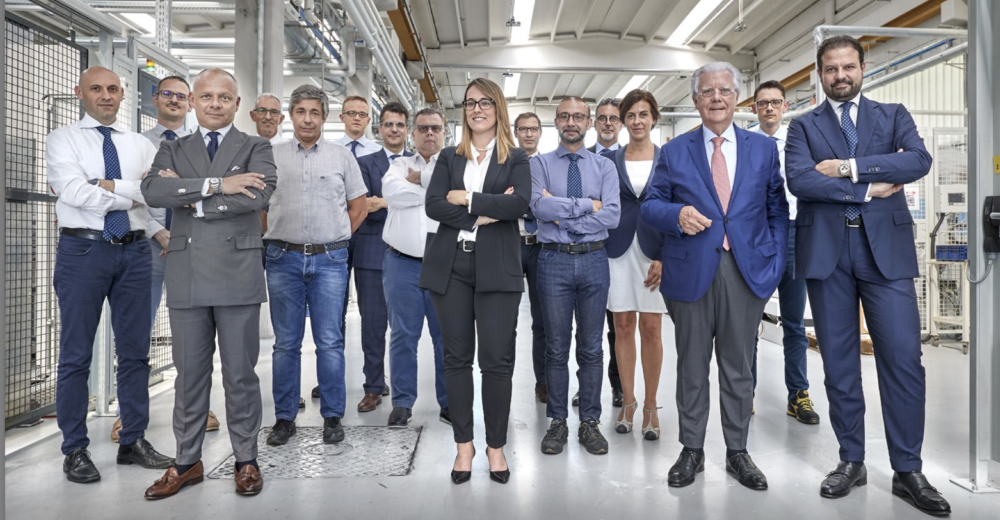
A few days ago, we were in a room with a group of entrepreneurs and managers from the Italian flat glass industry – manufacturers of insulating glass units, second- and third-generation founders of family businesses, people who know their material better than anyone else.
We asked a simple question: Is anyone systematically monitoring the patents of the sector’s major global players? Silence.
It wasn’t embarrassment. It was the precise snapshot of a widespread problem — and it doesn’t just concern glass.
The problem is not a lack of information. It is the direction of our gaze.
Let us start with a necessary paradigm shift. For years, companies have managed the future using forecasting tools: linear models, historical series, projections. These are excellent tools in stable contexts, where the future is truly an extension of the present. But that present no longer exists.
We are living in a condition of permacrisis – no longer a crisis that arrives and passes, but a structural instability where multiple systemic variables move simultaneously and non-linearly.
In this context, forecasting fails not because it is wrong, but because it was built for a world that no longer exists.
Foresight is a different approach. Instead of predicting, it seeks to build plausible scenarios, identify weak signals, and broaden the strategic field of vision before change becomes obvious to everyone.
A forecast-oriented company optimizes what already exists.
A foresight-oriented company explores what could exist. In short, the difference lies precisely in this shift in mindset.
We tried to apply this lens to three systemic crises that are reshaping the flat glass market from the outside. Not as threats to be endured, but as spaces of meaning to be deciphered.
The First Crisis: Climate — From Protective Glass to Productive Glass.
Buildings account for 40% of the energy consumed in Europe. The Energy Performance of Buildings Directive (EPBD) mandates zero-emission buildings by 2030. The building-integrated photovoltaics market— BIPV —is expected to triple by the end of the decade.
But data alone tells only half the story; what truly matters is the shift in meaning it brings with it.
For centuries, glass has been a passive element of the building envelope: it protected against cold, rain, and noise. Now, it is being asked to be active: to generate energy, recover heat, and operate within a closed-loop system. From a material that separates the indoors from the outdoors, it is becoming an infrastructure that connects them in an energetic relationship.
For manufacturers, this means that technical performance is no longer enough as a competitive lever; value is shifting toward those who know how to communicate what the glass enables the building to do, not just how the glass is made.
The Second Crisis: Demographics — From Glass that Supports to Glass that Cares.
By 2050, nearly one in three Europeans will be over the age of 65. Already, 34% of households in Europe consist of a single person, and 35% of adults report feeling lonely on a regular basis.
These are not just statistics on aging; they are data on how the way people live is shifting, and what they demand from the spaces that enclose them.
The lens of a sociological perspective makes demographic data far more interesting. Urban loneliness is not a marginal phenomenon: it is a structural change in how people relate to their environments. And spaces are responding. Biophilia—the documented biological need for contact with natural light, visual greenery, and sensory variation—is not an interior design trend; it is a physiological response to living conditions that are increasingly privatized and shielded.
Glass that maximizes natural light, filters UV rays, and creates visual continuity with the outdoors is no longer just an aesthetic detail; it becomes a care device. From a material that supports living to one that redefines it.
The Third Crisis: Mediated Reality — From Glass that Shields to Glass that Amplifies
The average adult spends over seven hours a day looking at a screen. The line between direct and mediated experience grows thinner every year. The philosopher Byung-Chul Han wrote precisely about this transformation: we live in a transparency society where everything must be visible, documentable, and shareable – and where this total transparency, paradoxically, destroys the very meaning of what it reveals.
Glass is the historical materialization of this tension: it is the material of transparency, but it can also be the material of the threshold – that porous boundary between inside and outside, private and public, real and digital.
Switchable glass that shifts from transparent to opaque on command is not a technological gimmick; it is, instead, a material response to a profound cultural need for control over one’s own visibility. The smart glass market is expected to reach ten billion dollars by 2030. This is not because technology has just become available (it has existed for years), but because the need it satisfies is only now transforming into explicit market demand.
From Glass as a Product to Glass as a Carrier of Meaning.
The thread connecting these three crises is a single paradigm shift: glass is no longer evaluated for what it is (its physical properties, certifications, thickness, etc.) and is instead being evaluated for what it means to those who experience it.
Safety. Well-being. Identity. Connection. Privacy.
Consequently, choice is no longer just about technical characteristics; it accounts for the deep human needs that glassing specific contexts and through specific design choices – can satisfy.
The companies that win the next decade will not necessarily be those with the highest-performing glass; they will be the ones that understand what meanings their product carries and know how to communicate them to those who choose it.
Three Foresight Practices
Margins, clients, production, and compliance tend to shrink our horizon toward the short term, while outside that perimeter, the landscape is shifting.
Information about the future is already available today, scattered across signals that those who know how to read them can intercept ahead of time.
Three practices remain underutilized by many Italian manufacturing companies.
-
Patent Monitoring — not just of direct competitors, but of players operating in adjacent sectors.
The patents filed today describe the products of tomorrow years in advance. Those who read them gain a structural advantage over those who wait for change to become obvious.
-
Systematic Observation of Fast-Paced Markets — Geographically or by segment.
Some contexts adopt earlier and faster; the dynamics developing there tend to propagate elsewhere with a predictable delay. Identifying and observing them methodically is one of the most accessible forms of strategic intelligence.
-
Interpreting Startups as Signals, Not Curiosities.
When significant capital converges on a specific technology, someone with access to insider information has already decided that this technology has a commercial future. That signal is worth more than most industry analyses.
The silence that followed our question about patents does not belong to the glass industry alone; it is shared by most companies across almost every sector.
It is not a lack of skills or curiosity. It is the difference between having, or not having, a method to transform available signals into strategic intelligence.
This is a process that a modern organization should implement with the same consistency it uses to monitor its operational KPIs.
The future cannot be predicted; it can only be built if one has the discipline to look in the right direction, and to do so before the cost of change becomes unsustainable.
Article written by:
Gian Paolo Lazzer
Director – Strategy Innovation
Ph.D. in Sociology of Consumption, specializing in market scenarios. Through the analysis of trends and weak signals, he helps companies develop products and services aligned with the future of their industry.
Read more

Upcoming events